
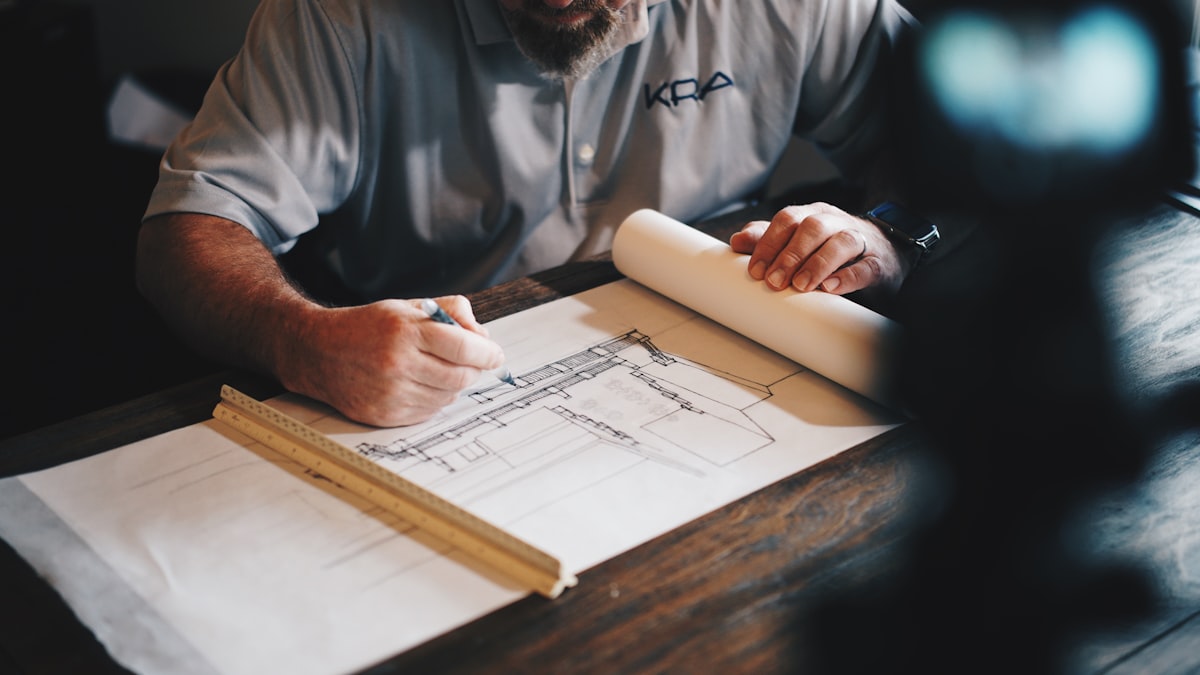
Almost every expensive mistake we've seen on a construction site traces back to a decision that should have been made on paper, weeks earlier. Planning isn't the exciting part of a project, but it's the part that determines whether the rest of it goes smoothly.
Site Survey and Soil Testing Come First
Before a foundation design is finalized, we survey the plot and test the soil. Skipping this step is one of the most common causes of foundation issues later — issues that are far more expensive to fix once RCC work has started than to plan around from the beginning.
A Detailed Drawing Prevents Costly Surprises
A clear architectural and structural drawing means the masonry, electrical and plumbing teams are all working from the same plan. Without one, it's common for a wall to go up in the wrong place, or a conduit route to conflict with a beam — both expensive to correct after the fact.
Budgeting Before Breaking Ground
A realistic budget, worked out against the actual drawings and material choices, avoids the mid-project scramble of cutting corners or pausing work to arrange more funds. We put this together during the planning stage, not after excavation has already started.
Approvals Take Time — Start Early
Building permissions and regulatory approvals can take weeks. Starting this process alongside the design phase, rather than after it, is one of the simplest ways to keep a project's overall timeline on track.
Thinking about a project like this for your own home or space?
Chat on WhatsApp